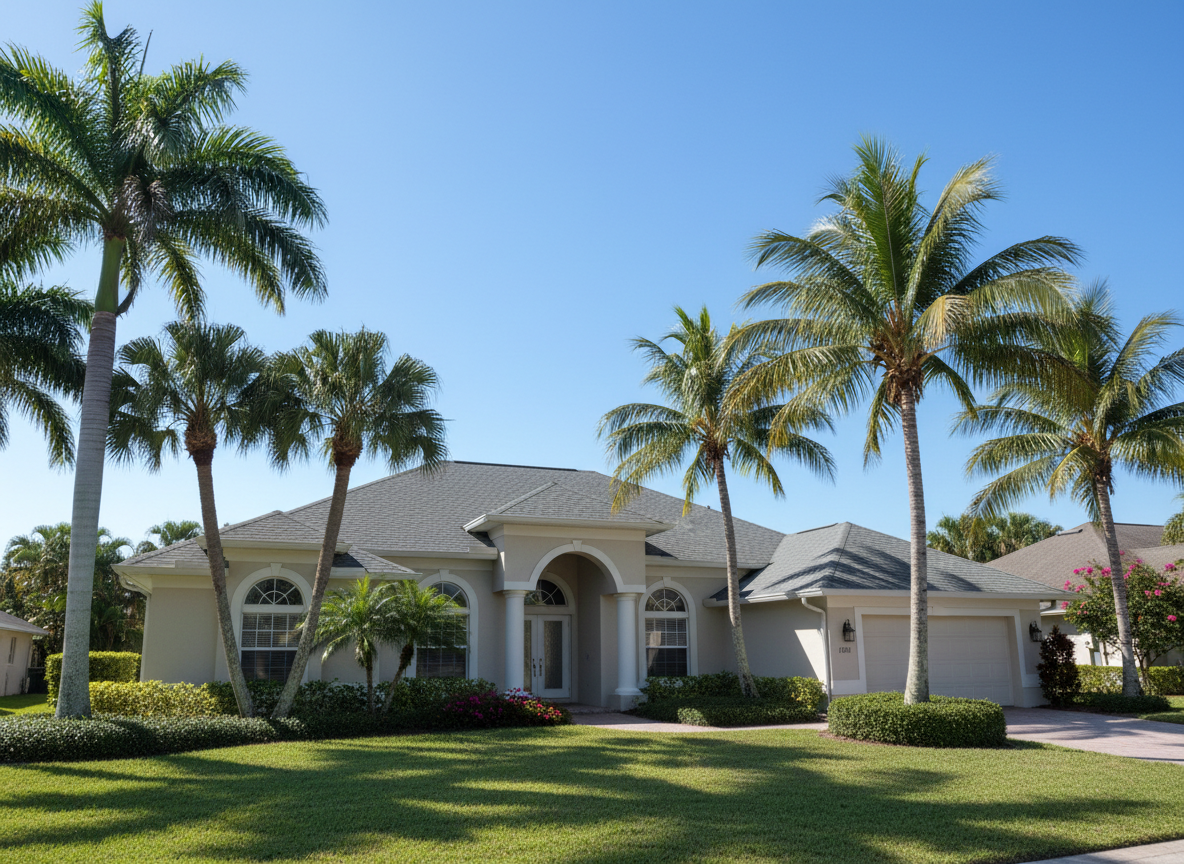
After a summer storm, a lot of Clearwater homeowners find the same thing: a few shingles out of line, a cracked tile near the ridge, or a strip of flashing standing up, and no leak yet. That window is when roof repair in Clearwater costs the least. Whether you call it roof fixing or a full repair, the job is to put the damaged part back to watertight before the next rain finds it.
This page explains what a roof repair service should cover, what a roof repair company should show you before work starts, and how to tell a repair from a replacement. Use it to judge any roof repair contractor you call, including us.
Choosing a Residential Roof Repair Contractor in Clearwater
Most Clearwater roofs that need work need a repair, not a new roof. The trouble is that a repair earns a contractor far less than a replacement, so the advice you get can lean toward the bigger job. Residential roof repair is worth getting right because it is usually the cheapest way to add years to a roof that is otherwise sound.
Affordable roof repair does not mean the lowest number on an estimate. It means fixing the right thing once. A low price that patches the wrong spot, or skips damaged decking, costs more when the problem returns after the next storm.
When you compare contractors for residential roof repair in Clearwater, ask each one:
- What exactly failed, and can you show me a photo of it?
- Why is this a repair and not a replacement, or the other way round?
- Does this repair need a permit, and who pulls it?
- What does the estimate cover, and what would change the price once the roof is opened?
A contractor who answers all four plainly is one you can work with. If the answers stay vague, or every question leads back to a new roof, keep looking.
For an active leak, see the active leak and storm guide. If you are trying to find where water is getting in, the [guide to tracing a roof leak](/) walks through how the source is found.
Why Clearwater Roof Damage Gets Worse Between Storms
Damage that is not leaking today is still damage. A lifted shingle has lost its seal, a cracked tile lets water reach the underlayment, and loose flashing opens a little more with every gust. In Clearwater, the next storm is rarely far away.
The National Weather Service puts the local rainy season from about May 25 to October 10, and normal annual rainfall at St. Petersburg-Clearwater International Airport is 53.62 inches. Summer afternoons bring repeated storms with strong gusts, so a weak spot gets tested again and again.
Age adds to it. Census figures put the median year built for homes in Clearwater at 1978. Many of those roofs have been replaced, but older flashing, vents and decking often remain, and those are the parts most likely to fail first.
Insurance timing matters too. Insurers often ask about roof condition at renewal, and storm claims have reporting deadlines under Florida law. A repair made and documented promptly keeps your options open on both fronts.
What You Can Check About Any Roof Repair
The useful proof on a roof repair is the kind you can confirm yourself. None of it depends on taking a contractor's word.
The license. Florida licenses roofing contractors under Chapter 489 through the Department of Business and Professional Regulation. Check the license and its status on MyFloridaLicense.com before hiring.
The permit question. Florida's building permit statute has no general exemption for roof repair, and local permit rules apply. Ask whether your repair needs a permit before work starts, and keep a copy if one is pulled.
The estimate. A repair estimate should name the damaged area, the repair method, the materials and what happens if hidden damage is found. "Repair roof" with a total is not an estimate you can compare.
The photos. Ask for photos before and after. They show the work was done where it was needed and give you a record for any later insurance question.
The address. Roof Leak Repair Clearwater FL is at 4461 112th Terrace N, Clearwater, FL 33762.
When Only Part of the Roof Is Damaged and the Insurer Asks About Its Age
This is one of the most common Clearwater roof questions, and the competing roofing pages we reviewed skip it.
A storm damages one slope or one corner of the roof. The rest looks fine. Then the insurer asks how old the roof is, and you start to wonder whether you need a whole new roof to keep your coverage.
Two separate rules are in play, and it helps to keep them apart.
The first is the building code. Florida's code limits how much of a roof can be repaired before the whole roof section must be brought up to current code, which is often called the 25% rule. State law also gives roofs already built to more recent code editions relief from that requirement, so a newer roof can often be repaired in sections.
The second is insurance. Florida law limits when an insurer can refuse or decline to renew a policy based on roof age alone, and it gives owners of older roofs a way to show remaining life through an inspection. Insurers may also ask for a 4-point inspection on older homes.
What this means in practice: get the damage inspected and documented, ask the roofer how the 25% rule applies to your specific roof, and ask your insurer or agent what they need to see. A repair is often still possible. These rules change, so confirm the current details for your roof and policy before you decide.
The same questions come up for owners of small commercial buildings in Clearwater. Commercial roof repair usually involves a flat or low-slope roof and a commercial policy, but the order is the same: document, confirm the code position, then decide on repair or replacement.
Storm, Hurricane and Wind Damage Roof Repair in Clearwater
Storm damage roof repair in Clearwater is mostly wind damage. Rain finds the opening, but wind makes it. Wind pulls hardest at the edges, corners and ridge of a roof, so that is where to look first after a storm, from the ground with binoculars rather than from a ladder.
Clearwater has seen what strong wind does. During Hurricane Milton in October 2024, the station at Clearwater Beach recorded a gust of 78 knots, about 90 miles per hour. Hurricane Helene, two weeks earlier, pushed the water level at Clearwater Beach to 6.67 feet above the normal high-tide line, and Hurricane Idalia in 2023 brought gusts of 50 knots there.
Wind damage roof repair depends on the roof type: shingles lift, crease or tear off, and a creased shingle can look flat again an hour later while its seal is broken. Tile can crack, slip or come loose at the ridge and hips. Metal panels can lift at the edges or loosen at their fasteners.
Roof damage repair after a storm should start with a record. Photograph the roof from the ground, any debris in the yard, and every stain inside before anything is fixed. That record supports a roof insurance claim if you make one, and it helps the roofer separate new storm damage from older wear.
Be careful who you hire. Storms bring out-of-area crews and door-knockers, and a storm damage roofer who arrives uninvited may not be licensed in Florida or around to stand behind the work. Check the license at MyFloridaLicense.com, do not sign over your insurance benefits on the doorstep, and get the storm damage repair scope in writing.
Hail is rarely the cause in Clearwater. In the federal storm record from 2000 through 2024, hail reported in Clearwater itself never exceeded 0.88 inches, so wind and wind-driven rain are the storm damage to look for here.
Roof Repair by Roof Type and Part
Shingle Roof Repair
Shingle roof repair covers asphalt shingles that are lifted, creased, cracked or missing. Each shingle is held by nails and a strip of sealant that bonds it to the one below, and once wind breaks that bond the shingle can flap, crease and let water under it. Florida heat softens and then ages the sealant, so older shingles lose their grip more easily in a storm.
A good roof shingle repair replaces damaged pieces, reseals lifted ones and checks the nailing around them, which is far cheaper than a new roof when the rest of the roof is sound. The main decision is whether replacement shingles can be matched closely enough for appearance and fit. For any shingle repair, ask for the brand and color of the replacement shingles, and keep a few spares if any are left over.
Tile Roof Repair
Tile roof repair covers concrete or clay tiles that are cracked, slipped or loose, and the underlayment beneath them. On a tile roof, the tiles protect against sun and wind, while the underlayment does much of the waterproofing. A cracked tile is a small fix on its own, but it lets water reach the underlayment, which is the costly part to replace.
Repair means resetting or replacing individual tiles and checking the underlayment where water may have reached it. Finding a matching tile can be the hardest part, especially on older Clearwater roofs where the original profile may no longer be made. Before any tile work, ask how the roofer will walk the roof without breaking more tiles and where replacement tiles will come from.
Metal Roof Repair
Metal roof repair covers panels that have lifted, fasteners that have backed out or lost their seals, and flashing or trim that has worked loose. Metal roofs shed water quickly and stand up well to wind when they are fastened correctly, but each exposed screw has a rubber washer that ages in the sun. When that washer fails, water follows the screw into the decking.
Most metal roof repair is replacing failed fasteners, resealing seams and refastening trim, a modest job compared with replacing panels. The main decision is whether damage is limited to fasteners or whether a panel is bent or holed. After a strong storm, look for panel edges that sit higher than the rest or screws with rust streaks below them, and point them out to the roofer.
Flat Roof Repair
Flat roof repair covers low-slope sections such as porch roofs, additions, carports and the main roof on some Clearwater homes. Flat roofs do not shed water as fast as pitched ones, so water that pools after a storm sits on the surface and finds any seam, blister or crack. In a rainy summer, a small opening on a flat section can let in a surprising amount of water.
Repair usually means patching or resealing the membrane and fixing the drains or edges that let water pond. Regular roof repair and maintenance matters more here than on a pitched roof, because small flaws grow quickly under standing water. After heavy rain, check whether water is still standing on the flat section a day later, and photograph where it collects.
Flashing and Roof Edges
Flashing is the metal that seals the joints where a roof meets a wall, chimney, skylight or change in slope, and the drip edge is the metal strip along the roof edge. Both take the brunt of wind, because wind lifts hardest at edges and joints. When flashing or edge metal loosens, wind-driven rain gets behind it even if every shingle and tile is intact.
Repairing flashing is usually a small job, but leaving it loose lets water rot the wall framing or decking behind it. On older Clearwater homes, flashing may be older than the roof covering around it. When you get any roof repair estimate, ask whether the flashing and edge metal near the damaged area were checked and whether they are included in the price.
Get Your Clearwater Roof Repaired Before the Next Storm
Call Roof Leak Repair Clearwater FL at [(727) 758-0462](tel:+17277580462). Tell us what you saw after the storm and what kind of roof you have. Before any work is agreed, ask to see the damage in photos and get a written estimate that names the repair and the area it covers.
If the damage turns out to be too widespread for a repair, roof replacement in Clearwater explains the next step, and new roof installation covers material choices.